


In our recent whitepaper collaboration with Noteefy, we analyzed technology adoption trends across the golf industry. By examining thousands of golf facilities, we explored which types of clubs are embracing modern technology, which are lagging behind, and where significant opportunities still exist.
Some of the findings were expected. Facilities with ultra-low green fees, for example, tend to lag behind the rest of the industry in technology adoption. Other findings were more surprising, such as the fact that member-owned facilities significantly trail other ownership types in their adoption of digital technologies.
While the whitepaper focuses on the findings, those insights are only possible because of the underlying data. Understanding how that data is collected provides important context for interpreting the trends and confidence levels behind the analysis.
The Data
Technology adoption in Downgrain is determined through the ongoing monitoring of golf facility websites and digital properties. Downgrain crawls and analyzes golf course websites on a weekly basis to identify publicly observable technology implementations and changes in adoption over time.
This information is presented to users to help them work faster, better understand their markets, and identify opportunities that might otherwise go unnoticed.
Technology Timelines
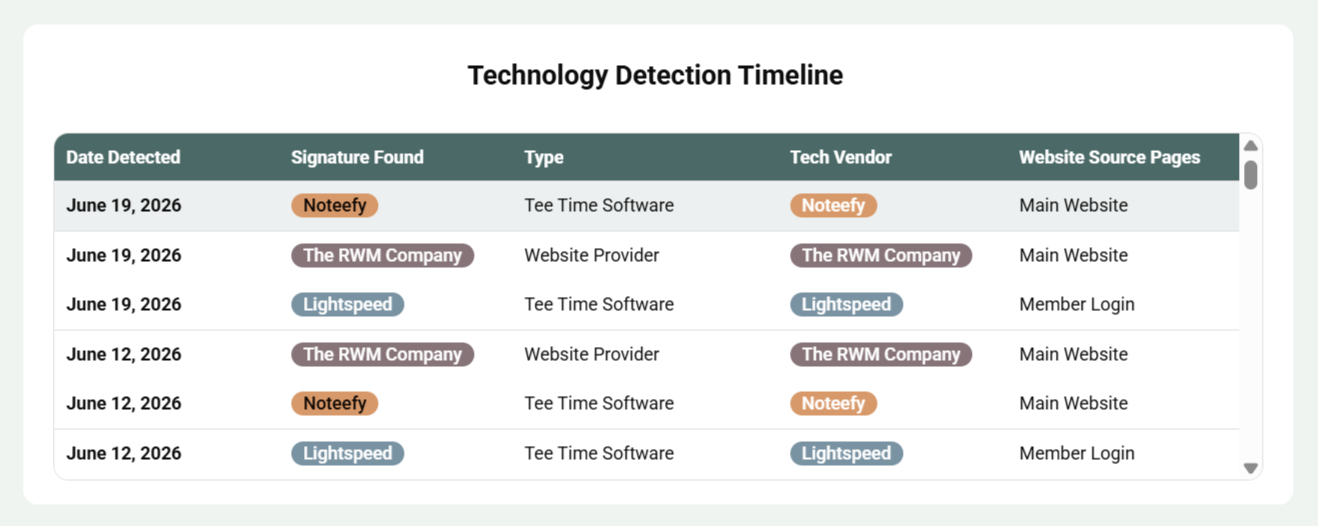
Downgrain facility profiles include historical technology timelines that show how a club’s technology stack evolves over time through weekly snapshots.
For example, Downgrain’s monitoring indicates that Broadlands Golf Course in Broomfield, Colorado, has consistently used both Noteefy and Lightspeed since our initial launch in 2025. Rather than relying on a single observation, users can view a historical record of technology adoption and usage over time.
Technology Changes
Because Downgrain continuously monitors facilities, users can also identify technology changes as they happen.
For example, on June 19, our systems observed Torres Blancas Golf Club in Green Valley, Arizona replacing GolfNow’s TeeItUp booking engine with Lightspeed’s technology. These technology migrations often create valuable sales and marketing opportunities for technology vendors serving the golf industry.
The Methodology
The technologies used by golf facilities are often detectable through source code analysis, embedded applications, third-party integrations, booking engines, tracking scripts, and other publicly observable digital signals.
These digital signatures allow Downgrain to identify technology adoption across thousands of facilities with a high degree of confidence. By continuously monitoring these signals, Downgrain can not only determine which technologies are currently in use, but also identify when facilities adopt, replace, or discontinue software solutions over time.
Technology Categories Covered
This study focuses on customer-facing and operational technologies that leave observable digital footprints, including:
- Online tee-sheet systems
- Tee-time booking engines
- Point-of-sale platforms
- Waitlist management tools
- Dynamic pricing solutions
- Revenue management technologies
- Customer engagement platforms
- Other golf-industry software solutions
Technologies observed in this study include platforms such as Noteefy, EZLinks, Lightspeed, Club Caddie, foreUP, GolfNow, and more than 50 other widely adopted golf-industry software solutions.
Using Technology Adoption Data
Some people look at technology adoption data and think it’s interesting. Others think it’s clever.
The more important question is: How is it useful?
Here are a few examples of how Downgrain customers are using technology adoption data today.
Finding Whitespace Opportunities
As our whitepaper with Noteefy revealed, thousands of golf facilities still operate without modern online booking technology.
A Downgrain customer focused on serving smaller golf facilities can quickly identify daily-fee and semi-private facilities that have websites but do not currently use online tee-time booking technology. This creates a highly targeted prospect list of facilities that may benefit from their solution but have not yet adopted a competing platform.
Targeting Competitor Accounts
One well-known tee-sheet provider has found that they perform particularly well in head-to-head evaluations against a larger competitor.
Using Downgrain, their sales team can quickly identify facilities currently using that competitor’s technology, build targeted prospect lists, and prioritize outreach toward accounts where they believe they have the strongest competitive advantage.
Identifying Facilities Using Complementary Technologies
Noteefy knows its platform integrates particularly well with Lightspeed and several other technology providers.
A facility that recently adopts Lightspeed may also be an excellent candidate for Noteefy. With Downgrain, sales teams can monitor facilities that have recently implemented complementary technologies and prioritize those accounts in their prospecting efforts.
Conclusion
Technology adoption data is valuable because it transforms scattered digital signals into actionable market intelligence.
Whether you’re identifying underserved market segments, targeting competitor accounts, monitoring technology migrations, or uncovering integration opportunities, understanding which technologies facilities use can help teams work more efficiently and make better decisions.
At Downgrain, our goal is not simply to track technology usage. Our goal is to provide a continuously updated view of the golf industry that helps organizations identify opportunities faster, prioritize the right accounts, and make decisions based on data rather than guesswork.
The golf industry changes every day. By monitoring those changes continuously, Downgrain helps companies spot opportunities before everyone else does.